Who needs all-wheel drive: a breakdown by trip scenario
All-wheel drive helps in some situations and not others. Scenarios where it matters, where it doesn't, and how drive types are split across the Prague fleet.
--- slug: who-needs-all-wheel-drive title: "Who Needs All-Wheel Drive in a Rental Car" description: "All-wheel drive helps in some situations and not others. Scenarios where it matters, where it doesn't, and how drive types are split across the Prague fleet." h1: "Who needs all-wheel drive: a breakdown by trip scenario" --- All-wheel drive is marketed as a universal upgrade: power to every wheel, so it must be better. In practice it is a tool for specific conditions — one that makes no noticeable difference in about half of all driving scenarios, and fully settles the question in the other half. The easiest way to split these two halves is by route and season.
In short. All-wheel drive matters when grip under the driven wheels is low: snow, ice, a wet incline, unpaved ground, or a fast start with a powerful engine. On dry city streets and a cleared motorway it barely shows itself. Of the 23 cars in the fleet, fifteen are all-wheel drive, seven are rear-wheel drive, and one is front-wheel drive.
What question does drivetrain actually answer
Drivetrain determines which wheels the engine sends its force through to the road, and only that.
The main limitation follows directly from that definition: drivetrain plays a role in acceleration and in holding the car under power. It plays no role in braking. In a corner taken at a steady throttle, it plays almost no role either. Everything to do with stopping and with the grip margin available mid-corner comes down to tyres, mass, and electronics.
So the correct question isn't "do I need all-wheel drive," but "will there be moments in my trip when the driven wheels won't have enough grip to accelerate." If there are no such moments, the difference between drivetrain layouts stays a matter of character, not capability.
The second factor is power. The more torque reaches an axle, the easier it is to break the wheels loose even on dry asphalt. Powerful rear-wheel-drive models demand a more careful right foot, and this shows up not in winter but in an ordinary start from a traffic light on wet cobblestones.
What it changes, and what stays the same
The useful effect comes down to three things.
Starting off. Force is spread across four contact patches, wheelspin is reduced, and the car pulls away cleanly right where a rear-wheel-drive car would break traction.
Confidence under power. Accelerating through a corner or out of one, an all-wheel-drive layout forgives a heavier throttle foot.
Climbing. A gradient shifts weight rearward, and on a slick surface the front axle unloads — this is where having drive on both axles helps.
What doesn't change: stopping distance, behaviour in aquaplaning, lateral grip in a corner taken at constant speed, and stability in a crosswind. These stay a matter of tyres and body, and no torque-distribution layout improves them.
Fuel consumption is worth a separate mention: keeping both axles permanently loaded takes extra energy. Over a long, flat stretch the difference isn't dramatic, but it is there.
Four scenarios where it genuinely matters
A winter trip out of the city. A climb to a mountain hotel, an uncleared car park, packed snow on a minor road after an overnight snowfall. This is the main scenario, and also the most common one in Czech conditions from November to March.
A wet incline at any time of year. Prague is a city with relief, and climbs up Letná, in Vinohrady, or around Hradčany after rain create exactly the situation where a powerful rear-wheel-drive car demands attention.
A fast start in a powerful car. If the trip involves dynamic driving — a track programme, a mountain road with a series of bends — all-wheel drive turns power into forward motion more stably and predictably.
Mixed surfaces. An unpaved or gravel approach to a country house, a vineyard, or a shoot location. It isn't off-roading in the formal sense, but a low-slung rear-wheel-drive sports car has no business there.
Scenarios where it makes no difference
The opposite list is shorter, but it covers most trips.
Summer in the city. On dry asphalt with a 50 km/h limit, drivetrain layout shows up in nothing — not comfort, not safety, not time spent getting anywhere.
A motorway in good weather. A run on the D1, D5, or D8 at a cruising speed is driving under light, steady load, where tyres, suspension, and sound insulation are what actually matter.
Short trips with parking in a garage. The car sits on a flat floor, pulls out onto a dry ramp, and moves along maintained streets.
Choosing it for status. All-wheel drive doesn't make a car faster in a straight line at equal power, and it adds no comfort. If it's bought "just in case," the case may never come up over the whole trip.
It helps to look at this from another angle: all-wheel drive widens the range of conditions in which a car stays controllable, but adds nothing within the range where the car already copes fine on its own. A summer week in Prague with a day trip to Karlovy Vary sits entirely inside that range, and every car in the fleet handles it the same way. A winter weekend in the Krkonoše mountains steps outside that range on the very first evening, and there the difference between drivetrain layouts becomes the difference between making it and leaving the car at the bottom of the hill.
How drivetrain is split across the fleet
The table splits the fleet by a single criterion — which axles are driven. Values are taken from the model listings in the fleet section.
| Drivetrain group | Cars | Models | When the group makes sense |
|---|---|---|---|
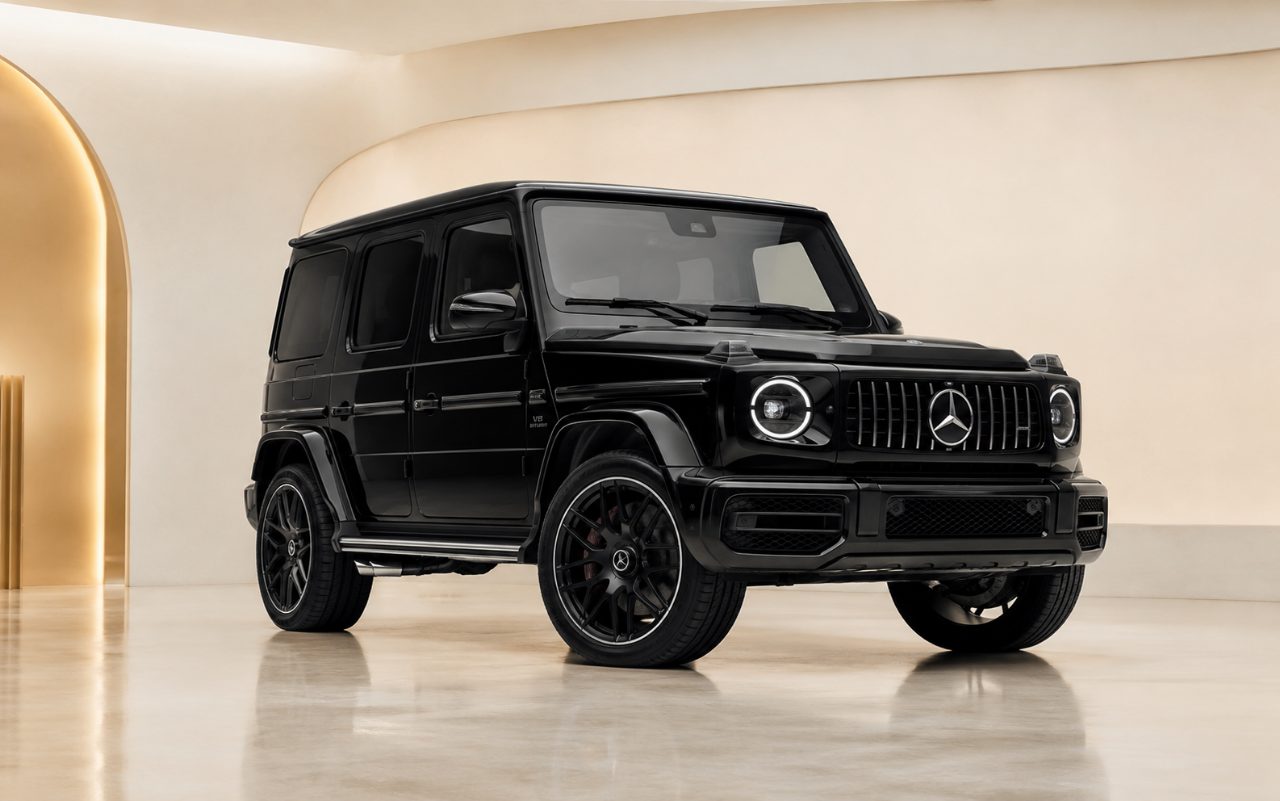
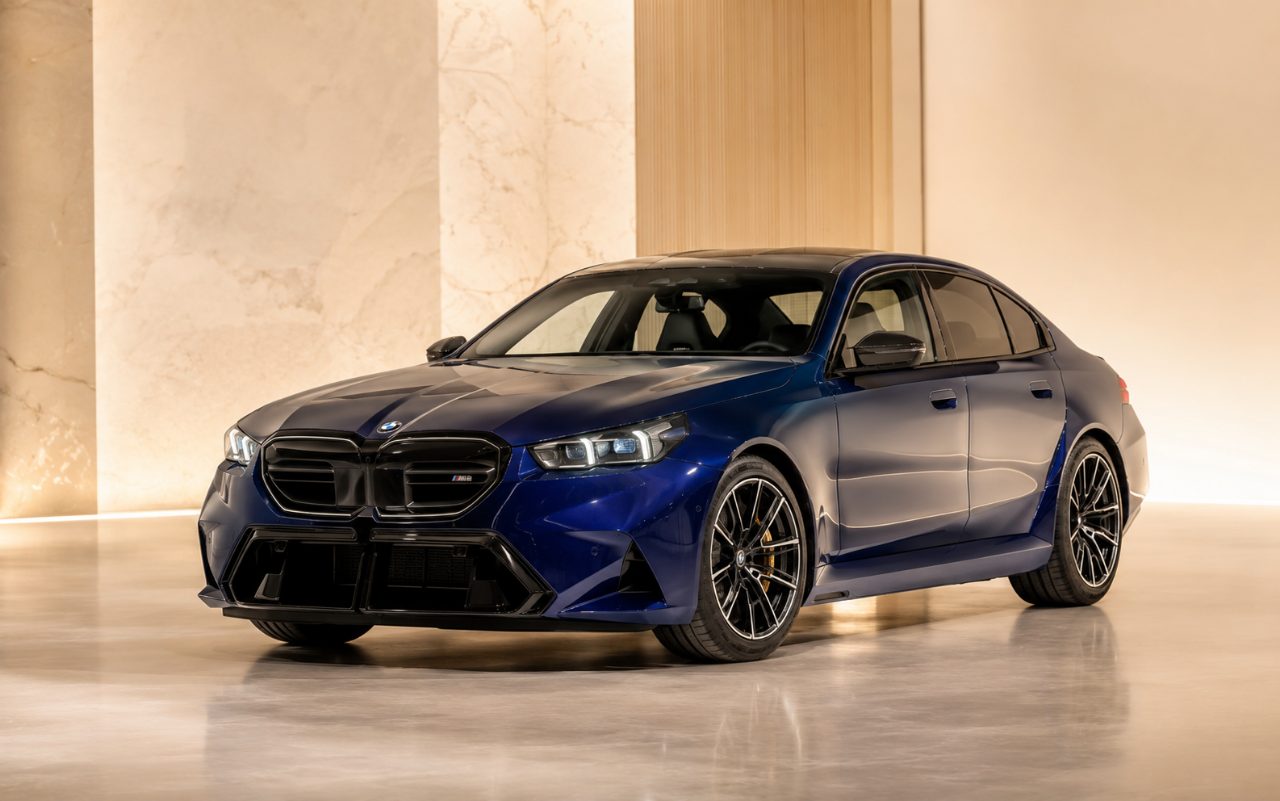
| All-wheel drive | 15 | BMW X7 xDrive40d, Mercedes-AMG G63, BMW X5 M Competition, BMW X6 30d xDrive, Mercedes-Benz S 350 d 4MATIC, Mercedes-AMG GT 63 S, BMW M5 Competition Manhart, BMW M5 Competition, BMW M4 Competition, BMW M4 Competition G82 Akrapovič, BMW M4 Competition Cabrio G83, BMW M8 Competition, one of the two BMW M3 Competition, Audi A5 Cabrio, Tesla Cybertruck | winter, inclines, unpaved ground, fast starts |
| Rear-wheel drive | 7 | Porsche 911 Carrera, Porsche 911 Cabrio, Chevrolet Corvette C8, Audi R8 V10 RWD, Mercedes-AMG C63 Coupé, BMW M2, the other BMW M3 Competition | dry season, even surfaces, pure driving dynamics |
| Front-wheel drive | 1 | Mercedes-Benz A-Class AMG Line | everyday city driving, year-round |
Two caveats to the table are worth stating clearly. The first: the two BMW M3 Competition cars share the same model name, but their driven axles differ — one car's listing shows M xDrive, the other shows rear-wheel drive. This is a case where you need to check the specific car's own listing, not the model name.
The second: within the all-wheel-drive group, the systems themselves aren't built alike. Some cars keep both axles loaded permanently, some engage the second axle through a clutch as needed, and on certain sport-tuned versions the base torque split is shifted so far rearward that in normal driving the car behaves almost like a rear-wheel-drive one. This makes little difference to which car suits a given trip — they all solve the problem of starting off on a slick surface — but it explains why two all-wheel-drive cars can feel different in the same bend.
The split by group also says something about the shape of the fleet: all-wheel drive is concentrated in larger bodies and in newer sport-model variants, while rear-wheel drive remains in the classic coupés, where it stays part of the car's character rather than a compromise.
Rear-wheel drive: who it suits
Seven cars in the fleet are driven only through the rear wheels, and that isn't a shortcoming — it's a different character.
A rear-wheel-drive car turns in more precisely: the front wheels are only doing the steering and don't share that job with putting power down. For a driver who values that feedback, it matters — and it's exactly why the classic sports models remain rear-wheel drive.
Conditions where the choice is right: dry or wet roads without snow, an even surface, and no extended slippery climbs on the route. The April-to-October season in Czechia fits this almost entirely.
Conditions where the choice becomes a mistake: snow and ice, a mountain route in the shoulder season, an unpaved approach. Here it isn't a question of driver skill — the driven axle simply doesn't have enough load to get moving.
Front-wheel drive: the one car in the fleet
The Mercedes-Benz A-Class AMG Line is the only front-wheel-drive car in the lineup, and it fills a niche no other car covers.
Front-wheel drive behaves predictably around a winter city: the engine's mass sits directly over the driven wheels, which works in its favour on a slippery start. For everyday city trips with tight parking, it's more convenient than any SUV and requires nothing to be arranged in advance.
The layout has its limits too: on an extended slippery climb the front axle unloads, and there an all-wheel-drive car is noticeably more confident. That matters for a winter trip to the Krkonoše mountains; for a week in Prague, it doesn't.
How to decide if you're unsure
Three questions in a row, and after the third the answer is usually obvious.
Does the trip fall between November and March? If so, all-wheel drive moves from nice-to-have to a sensible default, and tyre choice becomes the first thing to settle.
Does the route include climbs, mountains, or unpaved ground? The Krkonoše mountains, the Šumava region, the approach to a country property — the same conclusion applies as in the first question, regardless of season.
Is spirited driving part of the plan? For a track or mountain-road programme, drivetrain layout is worked out together with the route: options from the Experiences section are planned around the date and conditions on the day, with the car chosen to match — not the other way around.
One more thing worth checking — where the car will spend the night. A sloped driveway, an uncleared yard at a country house, or a gravel exit turns the morning, not the drive itself, into the problem. This detail comes up least often when booking, even though it more than anything else decides whether one driven axle is enough.
If the answer to all three questions is no, drivetrain can be dropped from your criteria and you can choose by capacity, size, and character instead. If any doubt remains, it's simpler to confirm the fleet's current line-up and a specific car's configuration when booking than to guess from the model name.
FAQ
Do you need all-wheel drive in Prague in summer?
Practically not. On dry city streets with a 50 km/h limit and on maintained motorways, the difference between drivetrain layouts shows up in neither safety nor travel time. In summer, drivetrain matters in two situations: a long wet incline and a very hard start in a powerful car. Otherwise, choose by capacity and size instead.
How many cars in the fleet have all-wheel drive?
Fifteen out of twenty-three, including every SUV, the flagship saloon, the four-door coupé, both BMW M5s, the BMW M8, both M4 coupés, the Audi A5 and BMW M4 G83 convertibles, the electric pickup, and one of the two BMW M3s. Seven cars are rear-wheel drive, one is front-wheel drive. Always check the specific car's own listing for its actual configuration.
Is it true that an all-wheel-drive car is safer?
Only when it comes to accelerating and holding traction. Stopping distance, lateral grip in a corner, and behaviour in aquaplaning don't depend on drivetrain — that's down to tyres, mass, and electronics. The confidence that all-wheel drive gives on a start can sometimes lead to choosing a speed that doesn't suit the conditions, which is a separate risk of its own.
Why do the two BMW M3s in the fleet differ in drivetrain?
They're two different cars carrying the same model name: one's listing shows M xDrive, the other shows rear-wheel drive. For a summer city trip the difference is minor; for a winter one, it's decisive. Going by the model name alone isn't enough here, and it's worth checking the drivetrain field on the specific car's listing before booking.
What should you choose for a mountain trip outside winter?
All-wheel drive and extra ground clearance remain sensible in autumn and spring too: weather changes faster at altitude, and mountain roads can have damp patches in the shade, gravel left over from repairs, and snow during the shoulder season. A low-slung rear-wheel-drive sports car isn't a good choice for that kind of route even with a dry forecast.
Does an all-wheel-drive car use more fuel?
Generally yes, since driving the second axle takes extra energy and the system itself adds weight. The difference depends on the type of system and the driving mode: it's small on a flat motorway and more noticeable in city driving. Against the difference between engines in the fleet, this factor is secondary and rarely affects the choice of car.
Ready for the next drive?
Choose the exact car and dates. The Masons team confirms availability and the final price personally.