
Convertible in Czechia: when an open top makes sense, and when it gets in the way
Czech climate and open tops: the real season, the winter tyre rule, three convertibles and a targa car in the Masons fleet, routes, and caveats.
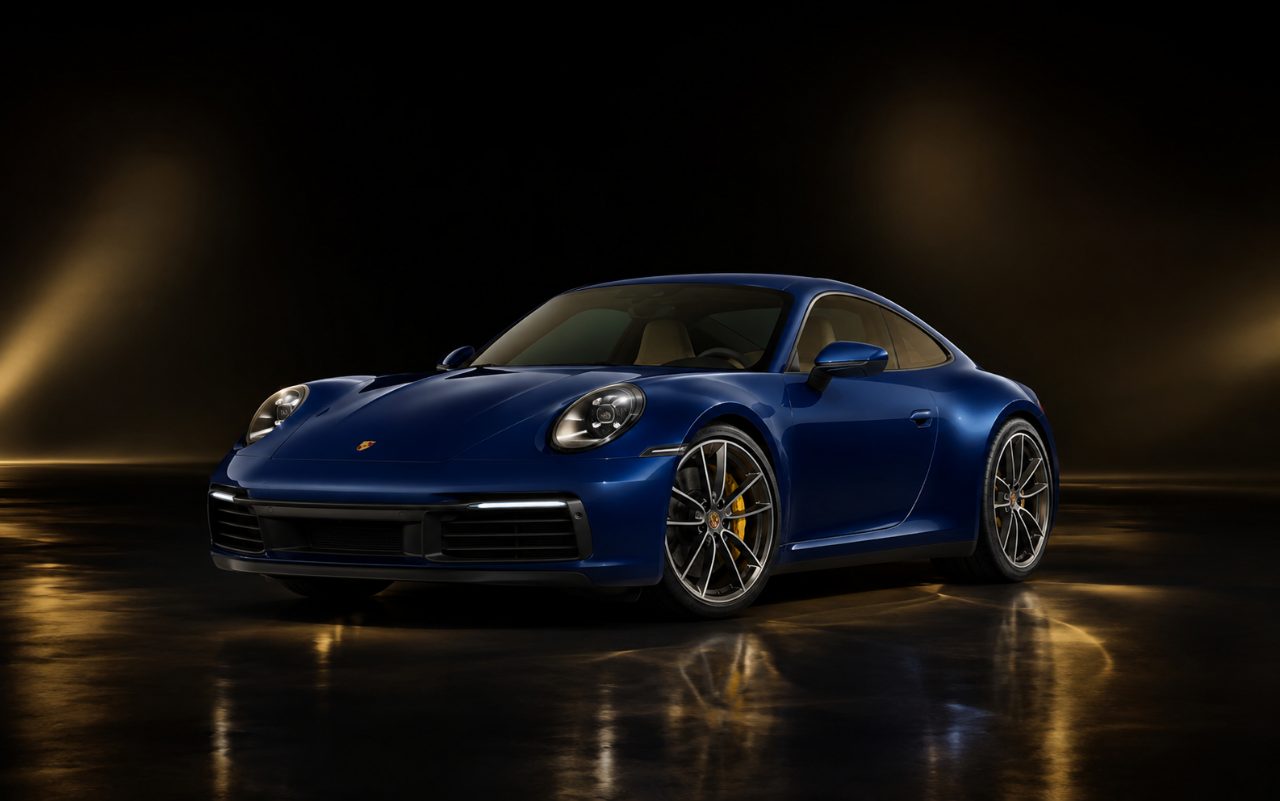
--- slug: convertible-in-czechia-when title: "Convertible in Czechia: when the top is worth it" description: "Czech climate and open tops: the real season, the winter tyre rule, three convertibles and a targa car in the Masons fleet, routes, and caveats." h1: "Convertible in Czechia: when an open top makes sense, and when it gets in the way" --- An open top is the one rental option that depends entirely on the weather over your specific three days, not on the car's specifications. Power works in any month; a folding roof does not. So the question of whether to take a convertible isn't settled by comparing models — it's settled by the calendar, the forecast, and the route.
In short. In Czech conditions, an open top genuinely works from roughly May to September, plus dry days in the shoulder seasons. In winter, a soft-top car is just an ordinary car with a more vulnerable roof. The fleet has three convertibles and one targa car, and what separates them isn't so much the roof as the drivetrain: rear-wheel drive versus all-wheel drive changes the demands on road surface more than the type of roof does.
What an open top asks of the trip
A folding roof carries three conditions that usually surface once you're already on the road.
The first is temperature and precipitation together. Plus twenty degrees with rain and plus ten degrees with sun are two different situations, and the second suits an open top better than the first. Czech summer tends to work out so that of three rental days, two may turn out suitable and one may not; the roof goes up in a matter of seconds, but you can't plan a trip around "definitely open top."
The second is speed. On a motorway with a 130 km/h limit, an open car turns into an exercise in patience: wind noise drowns out conversation and music. An open top comes into its own on an ordinary second- or third-class road, where the pace is lower and there's something to look at along the way, not on a straight motorway stretch.
The third is luggage. The folding mechanism takes up part of the boot in any convertible, whether the roof is up or down. Exact boot volumes aren't published on the fleet cards, so for a trip with two full-size suitcases it's worth confirming the volume before booking.
Season: what the law says and what the weather says
The law has nothing separate to say about convertibles — the roof isn't a subject of regulation. What is regulated is something else, and it's what determines the winter scenario for any car in the fleet.
The winter rule here is both calendar-based and weather-based: from 1 November to 31 March, winter tyres are mandatory if there is snow, ice, or frost on the road, or if it's expected. A calendar date alone isn't enough, and neither is weather alone — both conditions apply together. The minimum tread depth for a tyre to legally count as winter-rated is 4 millimetres; the general technical minimum for any tyre is lower but has nothing to do with winter status. Breaching the rule carries a fine of up to two thousand crowns, issued on the spot under the simplified procedure.
From there, the differences between countries start to show, and they're easy to miss on a trip across a border. German and Austrian cars have no calendar dates at all: the obligation kicks in during any month of the year, as soon as snow, slush, or black ice appears on the surface. Poland has no separate law on seasonal tyre changes, only a general requirement that tyres suit the driving conditions.
For a convertible, this isn't a ban, just a simple conclusion: from November to March, the open top stays an unused option not worth paying extra for, while drivetrain and tyres become the parameters that matter. A soft top adds its own small complication: an icy crust on the fabric roof or mechanism is better warmed off than scraped off, and in freezing weather it's best to operate the roof mechanism as little as possible.
The fleet lineup: four ways to go open-top
The fleet has 23 cars, and four of them have an open or removable roof. Below are those four, listed by the parameters that are published, plus roof type.
| Car | Roof type | Drivetrain | Seats | 0–100 km/h | Top speed |
|---|---|---|---|---|---|
| Porsche 911 Cabrio | folding roof | rear-wheel drive | not specified | 4.2 s | 293 km/h |
| BMW M4 Competition Cabrio G83 | folding fabric roof, electric drive | all-wheel drive | not specified | 3.7 s | 280 km/h |
| Audi A5 Cabrio | folding soft top, electric drive | all-wheel drive | not specified | 6.3 s | 250 km/h |
| Chevrolet Corvette C8 | targa — removable roof panel | rear-wheel drive | 2 | 2.9 s | 312 km/h |
What follows from this table in practice.
Drivetrain splits the four into two pairs. The Porsche 911 Cabrio and the Corvette are rear-wheel drive; the BMW M4 Cabrio and Audi A5 Cabrio are both all-wheel drive. On dry summer tarmac, the difference barely matters. In the cold shoulder season, when wet snow can fall in the mountains while it's raining in the valley, all-wheel drive removes some of the guesswork: power reaches both axles, and the car is less prone to wheelspin on a start or a long climb. This doesn't replace winter tyres — drivetrain works on top of the tyres, not instead of them.
Targa is a separate type, not a variety of convertible. On the Corvette, the roof panel is removable by hand in a parking spot, not at the push of a button on the move. The upside: body rigidity closer to a coupé's. The downside: the decision to go open-top is made once, before setting off, and if unexpected rain hits, you'll have to stop and put the panel back on. It also comes with two seats instead of four, and correspondingly, luggage space for hand baggage only.
The spread in performance within the four is wider than the spread between roof types. From 2.9 to 6.3 seconds to 100 km/h, these are different cars by purpose, and choosing between them by roof would be odd: the roof solves the same problem on all four.
The full fleet list and current car availability are in the fleet section.
Where an open top works, and where it doesn't
Routes out of Prague split unevenly for an open car, and not by distance.
Works well. Karlovy Vary: a mixed route, part on a modern motorway, part on a first-class road, where the pace is lower and an open top suits the drive. Southern Czechia toward Český Krumlov: after the motorway comes an ordinary road through hilly terrain, exactly the profile people take an open car for. Wine country in Moravia and its surroundings: low speeds, short stretches.
Works less well. Brno via the D1: nearly two hundred kilometres of continuous motorway, the busiest in the country, with an interchange reconstruction on the approach to the city. An open top just turns into noise here. Plzeň via the D5: short and entirely on the motorway, so you'd barely get the roof down before reaching the city.
Mountain sections deserve a separate note. The approach to the Krkonoše mountains runs along mountain road I/14, where roadworks with alternating single-lane traffic are planned for 2026. In summer it's a pleasant road for an open car; in the shoulder season, it's where the weather turns first.
Prague itself. The historic centre is a mixed case for an open car. On one hand, at low speed an open top gives better peripheral visibility than a coupé's narrow windows, which helps in the narrow lanes. On the other hand, cobblestones, tram tracks, and dense tourist crowds mean crawling along, and standing still in full view of everyone. If the trip is about the drive itself, it makes more sense to head out of the city and put the roof down beyond the built-up area, where 50 km/h stops being the limit and the road surface gets smoother.
Dresden and Vienna as weekend destinations for a convertible are formally reachable, but taking a rental car across the border requires prior written authorisation and a surcharge for extended insurance cover, arranged in advance, before booking. Ready-made open-top trip ideas and route suggestions for a given date are in the experiences section.
What to confirm before booking
A few things that don't appear in the specifications but affect the trip more than 0–100 times do.
Boot volume. Not published on the listings. For two people with hand luggage, it's a non-issue; for two people with suitcases for a week, it always comes up.
Operating the roof on the move. Different cars have different speed thresholds below which the roof can be folded while moving; this isn't stated on the fleet listings.
Fuel level on return. The car is returned with the same fuel level it was issued with; any shortfall is charged at the actual cost of refuelling. For an open car this is worth remembering separately: fuel consumption with the roof down is higher than with it up.
Number of passengers. The official seat count for the soft-top cars isn't stated on the listings, and the rear seats of a sports-silhouette convertible are built for a short stretch, not for two hours on the motorway. For a trip with four people, this is worth discussing in advance, so the rear passengers know what they're signing up for.
Seasonal tyres. It's worth asking directly what tyres are fitted to a specific car on your rental date, especially if the trip falls in late October or early April. Rental terms and general rules are in the FAQ section.
What not to do
Take a convertible in November just for the sake of the folding roof. The feature won't work, and you'll be paying for it anyway.
Plan an open-top drive around a motorway stretch. At 130 km/h, wind noise makes the trip tiring rather than enjoyable.
Choose between convertibles based on roof type. The fabric roofs on two of the fleet's cars are built along similar lines; what actually differs between them is drivetrain and seat count.
Assume the targa panel comes off while driving. It comes off in a parking spot, by hand, and goes back on the same way.
Treat all-wheel drive as a substitute for winter tyres. Power to both axles helps you pull away, but braking distance on ice is determined by the tyres.
FAQ
Which months can you actually drive with an open top in Czechia?
Reliably from May to September, plus the occasional dry day in April and October. In the shoulder season, the weather can go from sunshine to wet snow in the mountains within a single trip, so the roof gets folded based on the actual conditions, not on a plan. From November to March, the open top stays an unused option, and it makes more sense to choose a car by drivetrain instead.
Are winter tyres mandatory in Czechia, and from what date?
They're mandatory from 1 November to 31 March, but not by the calendar alone: the obligation arises when there is snow, ice, or frost on the road, or when it's expected. The minimum tread depth for winter status is 4 millimetres. Breaching the rule carries a fine of up to two thousand crowns, issued on the spot under the simplified procedure.
How many convertibles are in the fleet, and how do they differ?
Three cars have a folding roof: the Porsche 911 Cabrio with rear-wheel drive, and the BMW M4 Competition Cabrio and Audi A5 Cabrio, both all-wheel drive. The fourth open-top option is the Chevrolet Corvette C8 with a targa panel that's removed in a parking spot. Seat count and boot capacity aren't shown on the listings and are worth confirming when booking.
Can you fold the roof while driving?
On most modern folding-roof cars this is allowed at low speed, but the exact threshold varies by model and isn't stated on the fleet listings. Ask about it at pickup along with how the mechanism works — it's also the easiest way to see the roof fold before you set off.
What happens to luggage space in a convertible?
The folding mechanism permanently occupies part of the boot regardless of roof position, so usable volume is smaller than in a hard-roofed car of the same size. Exact litres aren't listed. As a rule of thumb: two people with hand luggage fit comfortably; two people with large suitcases is a question worth settling before booking.
Does a convertible make sense for a cross-border trip?
As a car — yes, but taking a rental car outside Czechia is only possible with prior written authorisation and a surcharge for extended insurance cover, arranged in advance. It's also worth keeping in mind that winter tyre requirements differ in neighbouring countries: in Germany and Austria there are no calendar dates for passenger cars, and actual weather conditions are what matters.
Ready for the next drive?
Choose the exact car and dates. The Masons team confirms availability and the final price personally.