A Car for Prague's Narrow Streets: How Dimensions Work Against the Centre
What limits a car in Prague's historic centre — street width, garage entry height, ramp clearance — and which fleet models suit the city.

--- slug: car-for-pragues-narrow-streets title: "A Car for Prague's Narrow Streets: Dimensions" description: "What limits a car in Prague's historic centre — street width, garage entry height, ramp clearance — and which fleet models suit the city." h1: "A Car for Prague's Narrow Streets: How Dimensions Work Against the Centre" --- The historic centre was built for horse-drawn traffic, and it cannot be rebuilt. That means any car in Prague is judged by three numbers — length, width and height — while power, drivetrain and acceleration play no part in the question at all.
In short. Three things get in the way in the centre: the width of the streets in Staré Město, the entry height of underground garages, and low ground clearance on ramps and cobblestones. The compact hatchback and the short coupé get through everywhere, the large SUVs and the pickup run into these limits daily, and the low sports cars suffer from door sills and ramps rather than from width.
What actually limits a car in the centre
There are four constraints, and they work independently of each other.
Width. The streets inside the historic core were laid out for carts passing each other, not two modern cars. Some are one-way, others are narrowed by cars parked along the kerb, and the mirrors end up closer to the wall than anyone would like.
Height. Garages under old buildings are built into existing cellars, and their entry portal is lower than in new shopping centres. A tall car simply doesn't fit in — this is checked against the sign at the entrance before driving in, not by feel.
Ground clearance. Cobblestones, tram crossings, sloped ramps and high kerbs are a constant set of unevenness. A low car has a harder time here than a wide car does on a narrow street.
Speed. The limit in a built-up area is 50 km/h, and the real average in the centre is lower still, because of traffic lights and pedestrians. Acceleration is never used at all, and choosing a city car on that basis makes no sense.
Length, width, height: which matters most
The three dimensions constrain the car in different situations, and they're worth telling apart.
Length gets in the way when parking along the street: the gap between two cars is a fixed size, and every extra twenty centimetres cuts the number of available spaces. In the dense centre this shows most in the evening.
Width gets in the way while driving: in a narrow lane and when passing oncoming traffic. Wide sports models have a particular difficulty here — they are wider than they look, because they flare out at the wheel arches, while the driver judges the car's width by the body.
Height gets in the way exactly once, but decisively: the car either fits into the garage or it doesn't. There is no middle ground, and the limit can't be worked around.
Ground clearance isn't technically a dimension, but it behaves like one in reverse: the lower the car, the more carefully it has to take ramps and courtyard entrances. A sill that an SUV doesn't even notice will touch the front overhang of a sports car.
Parking: zones, courtyards and underground levels
Parking in central Prague is organised by zones, and the rules differ by purpose — for residents, for visitors, or mixed. Payment and the allowed parking time depend on the specific zone, and the markings and signs on the spot show which one applies. It's worth checking this in person rather than relying on memory, because the zoning changes by decision of the city.
In practice, a rental car has three options. The first is the hotel's own garage: this settles the question entirely, provided the entry height is known. The second is a public underground garage: reliable, but it requires knowing the car's height in advance. The third is street parking within a zone: cheaper, but it takes time and doesn't suit every size of car.
A separate case is a courtyard or private car park with a barrier and a narrow entrance. There, both the width of the gate and the turning radius come into play, and a large SUV gets in only after several attempts, or not at all.
All road charges and parking during the rental period are the driver's responsibility, so this choice also has a direct effect on the cost of the trip.
The fleet by size class
The table divides the 23 cars by how they cope inside the historic centre. Engine and performance play no part in this breakdown.
| Size class | Models | Weak point in the centre | Bottom line for the centre |
|---|---|---|---|
| Compact | Mercedes-Benz A-Class AMG Line, BMW M2 | almost none | fits and parks everywhere |
| Compact convertible | Audi A5 Cabrio, BMW M4 Competition Cabrio G83 | rear visibility with the roof up | handles the city without trouble |
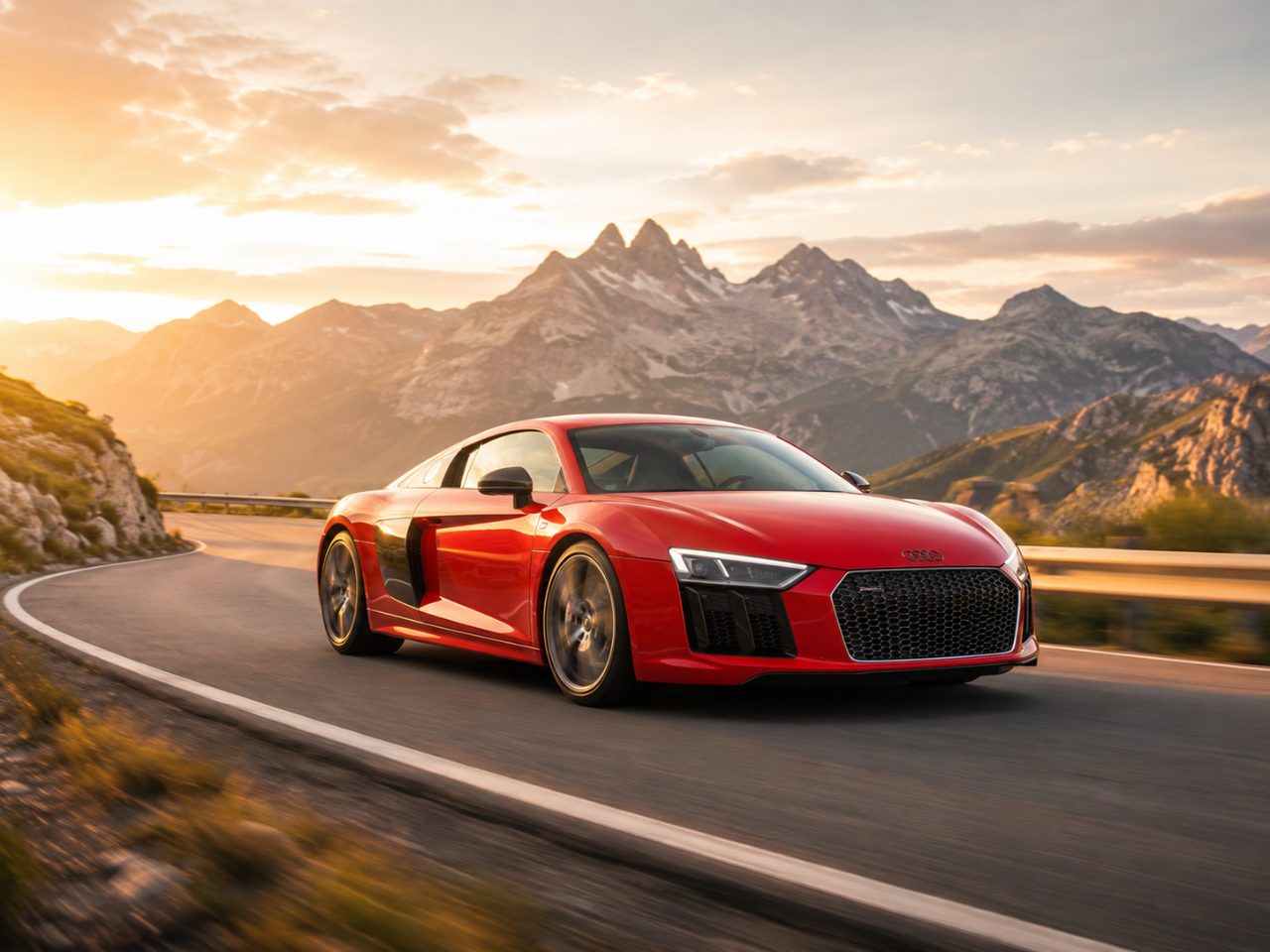
| Low sports cars | Audi R8 V10 RWD, Chevrolet Corvette C8, Porsche 911 Carrera, Porsche 911 Cabrio | ground clearance on ramps, width at the wheel arches | ramps and cobblestones one at a time |
| Sports coupés | BMW M4 Competition, BMW M4 Competition G82 Akrapovič, Mercedes-AMG C63 Coupé, BMW M8 Competition | body width, long doors in a tight space | manageable, except in cramped courtyards |
| Mid-size saloons | BMW M3 Competition (both cars) | length when parking on the street | no problems outside rush hour |
| Large saloons and the four-door coupé | BMW M5 Competition, BMW M5 Competition Manhart, Mercedes-AMG GT 63 S, Mercedes-Benz S 350 d 4MATIC | length, turning radius | fits into a garage; harder along the street |
| Mid-size SUVs | BMW X5 M Competition, BMW X6 30d xDrive | height and width together | depends on the specific garage |
| Large, tall models | Mercedes-AMG G63, BMW X7 xDrive40d | entry height, street width | the centre works against them every day |
| Pickup | Tesla Cybertruck | length and height together | the least convenient vehicle in the fleet for the centre |
The table shows a single pattern: the taller and longer the body, the more often the car runs into infrastructure rather than traffic. And it's exactly these same cars that come into their own on the open road, where these limits disappear.
Compacts: where they win
Two cars in the fleet raise no questions at all in the centre — the compact hatchback and the short coupé.
The Mercedes-Benz A-Class hatchback is the only car in the fleet with this body style and the only front-wheel-drive one. For a "week in Prague with daily parking by the office" scenario, it is objectively more convenient than any more prestigious car, and it stays just as convenient in winter.
The BMW M2 is the shortest coupé in the line-up. In size it's closer to the compact class than to the rest of the sports models, and it's the only car in the fleet that covers both the city and the open road at once, with no compromise on size.
The mid-size convertibles come next. An open body gives an unexpected advantage in the city — you can hear and see your surroundings better on a narrow street — and a noticeable drawback with the roof up: rear visibility worsens, and that's exactly what's needed for parallel parking.
Mid-class: saloons and sports coupés
Here everything comes down to practice and cameras, rather than physics.
Sports coupés are wider than they look, and they have long doors. In a tight underground car park, this means getting out of the car is harder than parking it there in the first place. A practical trick is to pick an end space and park nose-in against the wall.
Mid-size saloons behave predictably in the city: length is felt when parallel parking, width almost isn't. Both BMW M3s in the fleet fall into exactly this category, differing in drivetrain rather than in size.
Large saloons and the four-door coupé add a bigger turning radius on top of the length. They enter an underground garage without trouble, but turning around in a dead-end lane in Staré Město won't happen on the first try. It's worth looking at the body styles in the fleet section from exactly this angle, rather than from the angle of specifications.
Large cars: when the centre is a bad idea
Three cars in the fleet call for separate planning in the city: two tall SUVs and the pickup.
The Mercedes-AMG G63 and the BMW X7 share a tall body with straight edges. That gives excellent visibility and complete confidence on the open road — and it's exactly what creates a problem at the entrance to an underground garage, where the height limit is posted on the portal. It needs to be checked in advance, not on the ramp down.
The Tesla Cybertruck is the least convenient option for the historic centre, given the combination of its length, height and body geometry. As a car for trips out of town and for oversized loads it works; as a city car, it doesn't.
This doesn't mean large cars shouldn't be taken in Prague. It means the parking question needs to be settled for them in advance: a hotel's surface car park, a garage with a known entry height, or having the car delivered to wherever the route begins.
What to do if the car is large after all
Four practical measures that remove most of the city difficulties.
Confirm the garage's entry height in advance. The sign with the limit hangs on the portal, and finding the figure before booking is easier than turning around on the ramp down.
Don't leave the car in the centre overnight. A surface car park outside the historic core removes both the zone restrictions and the risk of scraping the body in a tight row.
Route around the core. Driving through Staré Město almost never saves time: traffic lights, pedestrians and tram tracks eat up any gain.
Build in time to find a space. In the evening, free spaces in the centre run out sooner than expected, and only a smaller share of them suit a large body. Half an hour of slack before dinner or a meeting removes most of the stress, and it also removes the temptation to park where it isn't allowed.
Arrange delivery and collection at an address. The car is brought to an address in Prague and picked up from the same place, and delivery to the airport terminal is arranged around the flight — this removes the parking question at both ends of the trip entirely.
FAQ
Which car in the fleet is most convenient in central Prague?
The compact Mercedes-Benz A-Class AMG Line: it's shorter than the rest, narrower than most of the bodies, and gets into the underground garages of the old town without trouble. Next comes the BMW M2 — the shortest coupé in the line-up. Neither car requires planning parking in advance, whereas the large SUVs have to do this almost every day of the trip.
Will a large SUV fit into an underground garage in the centre?
It depends on the specific garage: the entry portal under an old building is lower than in newer complexes, and the figure is posted on a sign at the entrance. Tall bodies — the Mercedes-AMG G63, the BMW X7 and the pickup — run into this limit more often than the rest. The garage height is worth finding out before booking, because the limit can't be worked around once you're there.
Does a sports car's low ground clearance cause problems in Prague?
It does, but differently from the dimensions. The problem isn't narrow streets, but sloped garage ramps, high kerbs, tram crossings and the cobblestones of the historic districts. It doesn't stop the car, but it does mean taking such spots slowly and at an angle. For one or two trips a day this is tolerable; for daily city use, it's tiring.
What speed limit applies within Prague?
The limit in a built-up area is 50 km/h, and on stretches of motorway and expressway within the city it's 80. The real average speed in the centre is noticeably lower because of traffic lights, trams and pedestrian crossings. That means a car's acceleration has no practical relevance in a city scenario and shouldn't influence the choice.
How does paid parking work in the centre?
The centre is split into zones with different regimes — for residents, for visitors, and mixed — and the payment rules and permitted parking times differ between them. The regime in force is determined by the signs and markings on the spot, and it needs to be checked in person. All parking charges during the rental are paid by the driver.
Is it worth driving into the historic centre at all?
Usually not. Driving through the old core rarely saves time: one-way streets, pedestrian zones and tram tracks lead to detours, and finding a parking space has to be handled separately. It's more practical to leave the car outside the core or in the hotel's garage and get around on foot inside it — and to choose a car for the routes out of town, not for the centre.
Ready for the next drive?
Choose the exact car and dates. The Masons team confirms availability and the final price personally.