Driving to Germany in a rented car: what the car needs and what the driver needs
What a trip from Prague to the German autobahn requires: written consent to cross the border, extended insurance, and unrestricted stretches.
--- slug: car-for-a-trip-to-germany title: "Driving to Germany: car and paperwork for the autobahn" description: "What a trip from Prague to the German autobahn requires: written consent to cross the border, extended insurance, and unrestricted stretches." h1: "Driving to Germany in a rented car: what the car needs and what the driver needs" --- From Prague, the German border is closer than it feels from the city: about 94 km to the crossing on the D8 toward Dresden, and around 151 km on the D5 toward Nuremberg. Beyond that, the road is built differently from a Czech motorway, and a trip there in a rented car breaks down into three tasks: getting permission to leave the country, sorting out road charges on both sides of the border, and choosing a car suited to several hours behind the wheel rather than to a photograph.
In short. Taking a Masons car across the border is only possible with written consent and an additional charge for extended insurance cover — a rental condition arranged in advance. On most of the German autobahn network there is no upper speed limit, but 130 km/h remains the official recommendation, and exceeding it works against the driver when an accident is examined afterwards. For a long haul like this, it makes more sense to look at an all-wheel-drive diesel with five seats than at the highest top-speed figure in the specs.
What actually decides this trip
The conversation about driving into Germany almost always starts at the wrong end — with which car is fastest. Speed decides the least: the difference between a car capable of 250 km/h and one capable of 315 km/h only shows up on a stretch you first have to find, then wait for it to clear.
Three other things decide it. First, the legal status of a driver behind the wheel of someone else's car, and the rental company's permission to leave Czechia. Second, road charges: the Czech side is tolled, the German side is free for passenger cars, and the logic of the two systems doesn't match. Third, the road itself: climbs through the Ore Mountains with tunnels and a constant speed limit, followed by a stretch where there may be no limit at all — which changes what's required of the car from "quick off the lights" to "steady behaviour for two or three hours straight."
Everything else — colour, exhaust note, choice of carbon trim — has nothing to do with this scenario.
Paperwork: what the car needs and what the rental company needs to provide
The rental condition is stated briefly: crossing the border is allowed only with written consent and an additional charge for extended insurance cover. That means the cross-border route is discussed before booking, not announced at pick-up. Fines, parking, vignettes and toll roads during the rental are also charged to the client, settled against actual costs. Specific conditions and the surcharge vary, so confirm them when booking, and see the general rules in the FAQ section.
On the state's side, the paperwork required is more modest than people assume. Within the European Economic Area, third-party liability cover applies automatically across the whole territory, and a paper green card is not needed for Germany. A valid driving licence and the vehicle's registration certificate are mandatory. Czechia dropped the requirement to carry these on domestic trips from the start of 2024, but that change does not extend abroad — there, you still need to carry them.
Written consent from the car's owner is not legally required in most countries in the region, but at a spot check it removes the question of why the person driving isn't the registered owner. Poland is a separate case: according to the Czech Automobile Club, local authorities require this kind of authorisation officially; an independent Polish government source doesn't confirm this, so treat it as a strong recommendation rather than a hard rule. Poland isn't needed for a route to Dresden or Nuremberg, but transit north through it does happen.
Systematic border control within the Schengen area has been abolished, but random police and customs checks remain lawful. As of when this text was prepared, Germany was maintaining temporary border checks at its borders, including with Czechia, in mobile form: fixed checkpoints have been removed, but the chance of being stopped remains. Such measures are extended every few months, so check the status of the relevant border before you leave.
The autobahn: where there really is no limit
There's one key figure: official road statistics put roughly seventy percent of the German autobahn network's length as having no fixed speed limit. Almost a third of what remains is limited by signs — interchanges, roadworks, built-up areas, hazardous stretches — and on top of that, variable limits apply on electronic gantries in rain, fog and congestion.
Where there is no sign, there genuinely is no mandatory upper limit. In its place, the administrative regulation accompanying the traffic rules records a recommended speed of 130 km/h: exceeding it carries neither a fine nor points. The civil-law side works differently. Germany's Federal Court of Justice ruled back in the early 1990s that a driver going faster than the recommended speed cannot simply claim the accident was unavoidable; later case law clarified that this doesn't create automatic shared liability — a proven link between speed and the circumstances of the accident is required. The outcome depends on the specific case, but the possibility of a dispute arises precisely once you're past 130.
The opposite mistake is more dangerous. Austria, Poland and Slovakia have no unlimited stretches at all: 130, 140 and 130 km/h are hard limits with a full penalty for exceeding them. A driver who has spent the day ignoring the number 130 on the autobahn gets, on entering Austria, not a civil-law nuance but a fine.
There's also an asymmetry over alcohol. In Czechia there is no permitted threshold at all — any alcohol content is prohibited. In Germany the limit is 0.5 per mille, and zero for drivers under 21 or in their first two years of holding a licence. "If it's not allowed at home, it's not allowed there either" is safer than the reverse, but it's worth knowing the difference — it explains why German and Czech drivers react differently to being offered a glass of wine over lunch.
The road to the border and paying for it
The two main routes out of the country work differently. The D8 to Dresden is the most "mountainous" of the Czech motorways: a chain of tunnels through the Ore Mountains, the 2,115-metre Panenská tunnel, a maximum elevation of 644 metres, and a constant 100 km/h limit on the Trmice–Knínice climb. Right across the border, the German A17 runs for about 45 km, with its own tunnels before Dresden that are periodically closed for maintenance.
The D5 to Nuremberg is smoother: 120 km/h for almost its entire length to Rozvadov, the Valík tunnel, and a maximum elevation of 601 metres near Přimda. Allow extra time here not for the terrain but for queues at the border on Friday evenings and Sundays.
Paying for the roads: in Czechia you need an electronic vignette linked to the car's registration number, with no sticker on the windscreen; it's bought for a specific car and can't be transferred to another. In Germany there is neither a vignette nor an autobahn toll for passenger cars — tolls apply only to freight transport. The instinct that "you have to buy something at the border" doesn't apply here, though on the way back check that the Czech vignette is still valid.
The fleet, assessed for a long haul
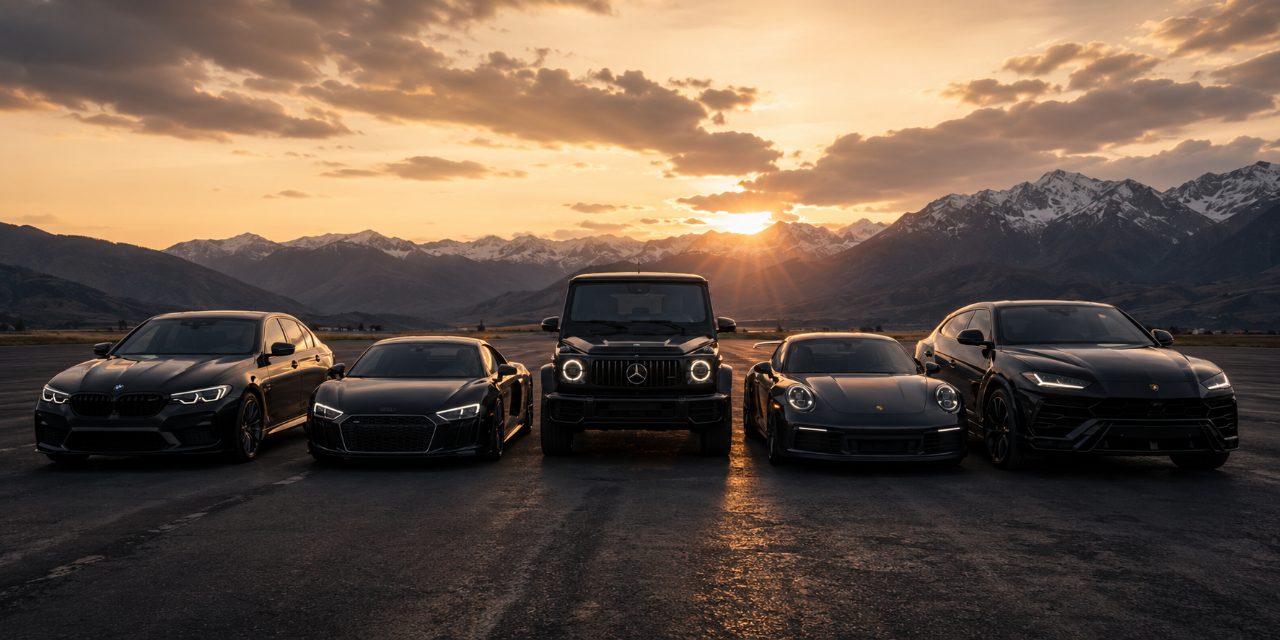
Below is the fleet, filtered to the parameters published on the listings that matter for this trip: fuel type, drivetrain, seats and stated top speed. Dimensions, boot volume and range aren't shown on the listings — where that matters, there's a caveat below.
| Car | Fuel | Drivetrain | Seats | Top speed | What it means on the route |
|---|---|---|---|---|---|
| Mercedes-Benz S 350 d 4MATIC | diesel | all-wheel drive | 5 | 250 km/h | five seats and diesel — the most predictable option for a long haul |
| BMW X7 xDrive40d | diesel, 48V | all-wheel drive | 7 | 245 km/h | the only seven-seat car in the fleet |
| BMW X6 xDrive | see caveat below | all-wheel drive | not specified | 230 km/h | tall ride height, the lowest top speed among the all-wheel-drive cars |
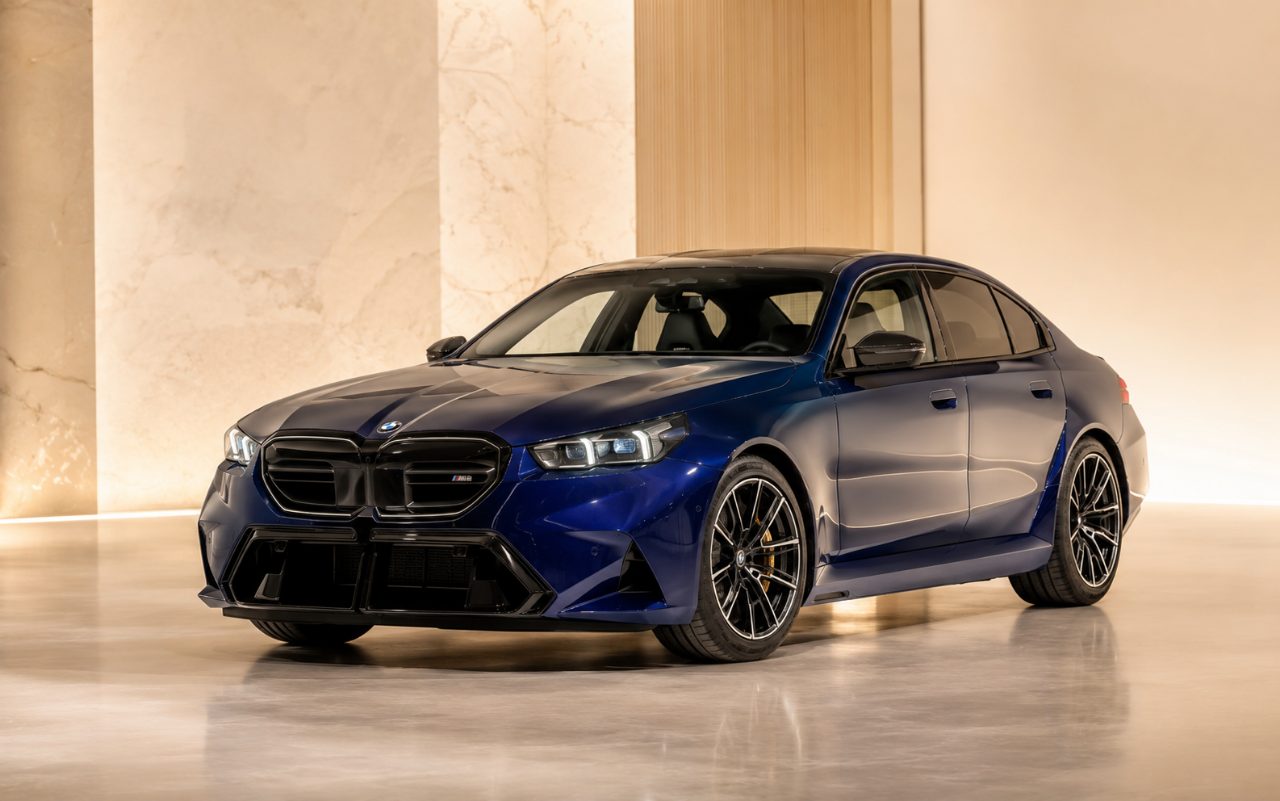
| BMW M5 Competition | petrol | all-wheel drive | not specified | 305 km/h | far more speed in reserve than this trip will use |
| BMW M5 Competition Manhart | petrol | all-wheel drive | not specified | 330 km/h | the highest figure in the fleet |
| BMW M8 Competition Coupé | petrol | all-wheel drive | 4 | 250 km/h | four seats, rear-row access via the front seat |
| Mercedes-AMG GT 63 S | petrol | all-wheel drive | not specified | 315 km/h | the strongest performance among the fleet's larger bodies |
| BMW M4 Competition G82 Akrapovič | petrol | all-wheel drive | 4 | 305 km/h | all-wheel drive with four seats |
| BMW M2 G87 | petrol | rear-wheel drive | not specified | 250 km/h | rear-wheel drive: needs care on a wet autobahn |
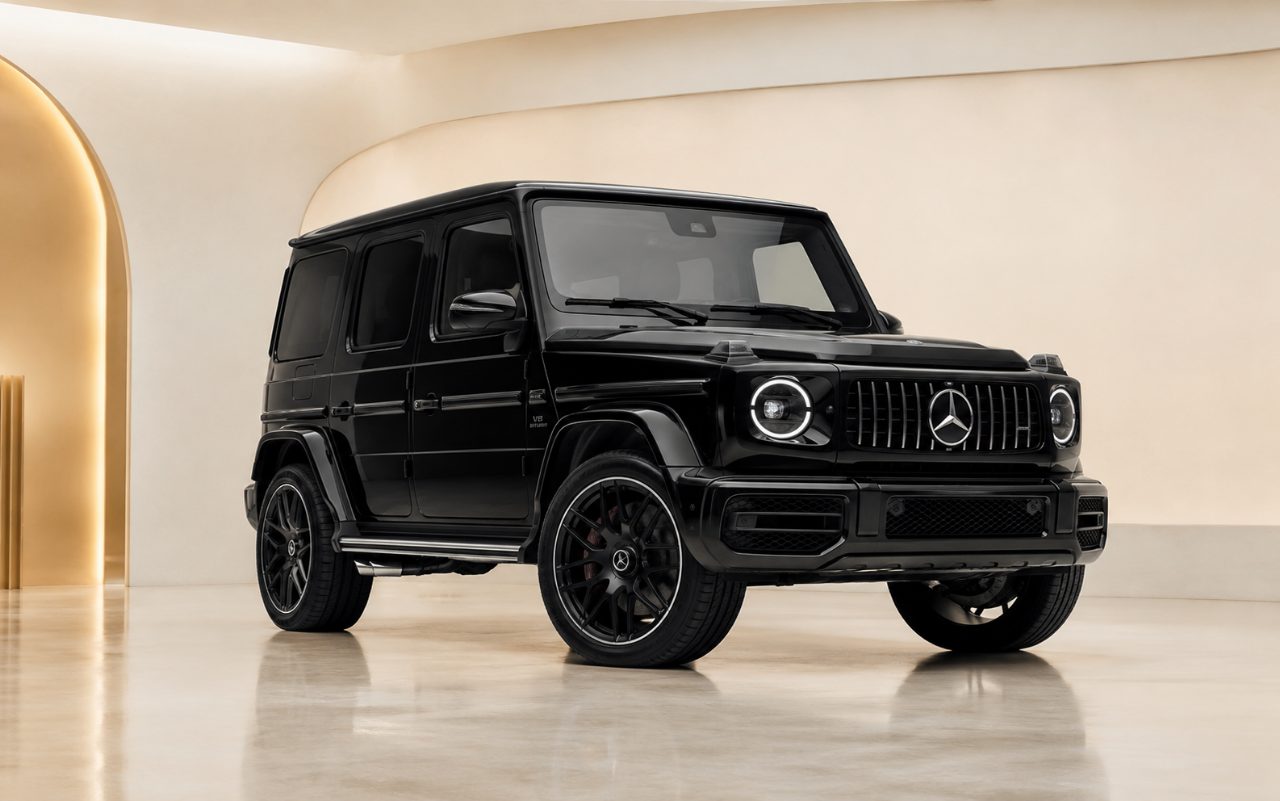
| Mercedes-AMG G63 | petrol | all-wheel drive | not specified | 220 km/h | the lowest top speed in the fleet |
| Tesla Cybertruck | electric | all-wheel drive | 5 | 210 km/h | route needs to be planned around charging points, range not published |
| Mercedes-Benz A-Class | see caveat below | front-wheel drive | not specified | 227 km/h | the only front-wheel-drive car in the fleet |
Two caveats on the listing data. For two cars — the X6 30d SUV and the A-Class hatchback — the fuel field contradicts the engine code in the same listing, so the table shows a reference to this caveat instead of a value; confirm the fuel type for these when booking. Range and tank capacity are not published for any car, so fuel stops on the route can't be worked out from the listing.
The practical takeaway is simple. For two people with light luggage, almost the entire all-wheel-drive part of the fleet works for the autobahn. For four with suitcases, the choice narrows to the saloon and the SUVs. For the electric car, the trip is planned around charging stops rather than speed. The full list is in the fleet section.
What not to do
Choosing by top speed. A clear stretch with no limit, no roadworks and no heavy traffic is rare even on the "unlimited" seventy percent of the network. The difference between 250 and 330 doesn't show up in a real trip.
Assuming 130 in Germany means nothing. No administrative penalty for exceeding it, but civil-law consequences if there's an accident.
Carrying the German habit over to Austria. There, the same number is a hard limit.
Buying a "German vignette." It doesn't exist for passenger cars.
Leaving the cross-border question until pick-up. Without written consent and extended insurance cover arranged in advance, a border crossing isn't approved; arrange it ahead of time through contact.
FAQ
Can I take a rented Masons car into Germany?
Yes, on two conditions: written consent to cross the border and an extra charge for extended insurance cover. Both are settled before the rental starts, not at pick-up. The surcharge and the list of approved countries depend on the model and rental period, so confirm them when booking.
Do I need a green card to drive to Germany?
No. Within the European Economic Area, third-party liability cover applies automatically across the whole territory under a single premium, and nothing extra needs arranging at the border. Carry a driving licence and the car's registration certificate, and written consent from the owner removes unnecessary questions at a roadside spot check.
Where on the autobahn is there really no speed limit?
According to official statistics, around seventy percent of the network's length has no fixed limit. The rest is limited by signs: interchanges, roadworks, built-up areas, hazardous stretches — plus variable limits on electronic gantries in bad weather and congestion. Signs and gantries take priority, and missing them is the most common mistake.
Are there border checks between Czechia and Germany?
As of when this text was prepared, Germany was maintaining temporary border checks, including with Czechia, in mobile form: fixed checkpoints have been removed, but random stops are possible. Czechia has not introduced its own measures. Such decisions are extended every few months, so check the status of the specific crossing before you leave.
Which car in the fleet suits a long autobahn haul best?
Based on published data, an all-wheel-drive diesel with five seats, or a three-row SUV for a group. A rear-wheel-drive car needs a gentler right foot on wet surfaces, and an electric car changes the planning logic entirely: the route is built around charging stops. Range and boot volume aren't published on the listings.
Who pays fines and road charges during the rental?
The client does. Fines, parking, vignettes and toll sections during the rental are charged to the renter. The Czech electronic vignette is linked to a specific car's registration number and can't be transferred, while in Germany there's no autobahn charge at all for passenger cars — nothing to buy there.
Ready for the next drive?
Choose the exact car and dates. The Masons team confirms availability and the final price personally.